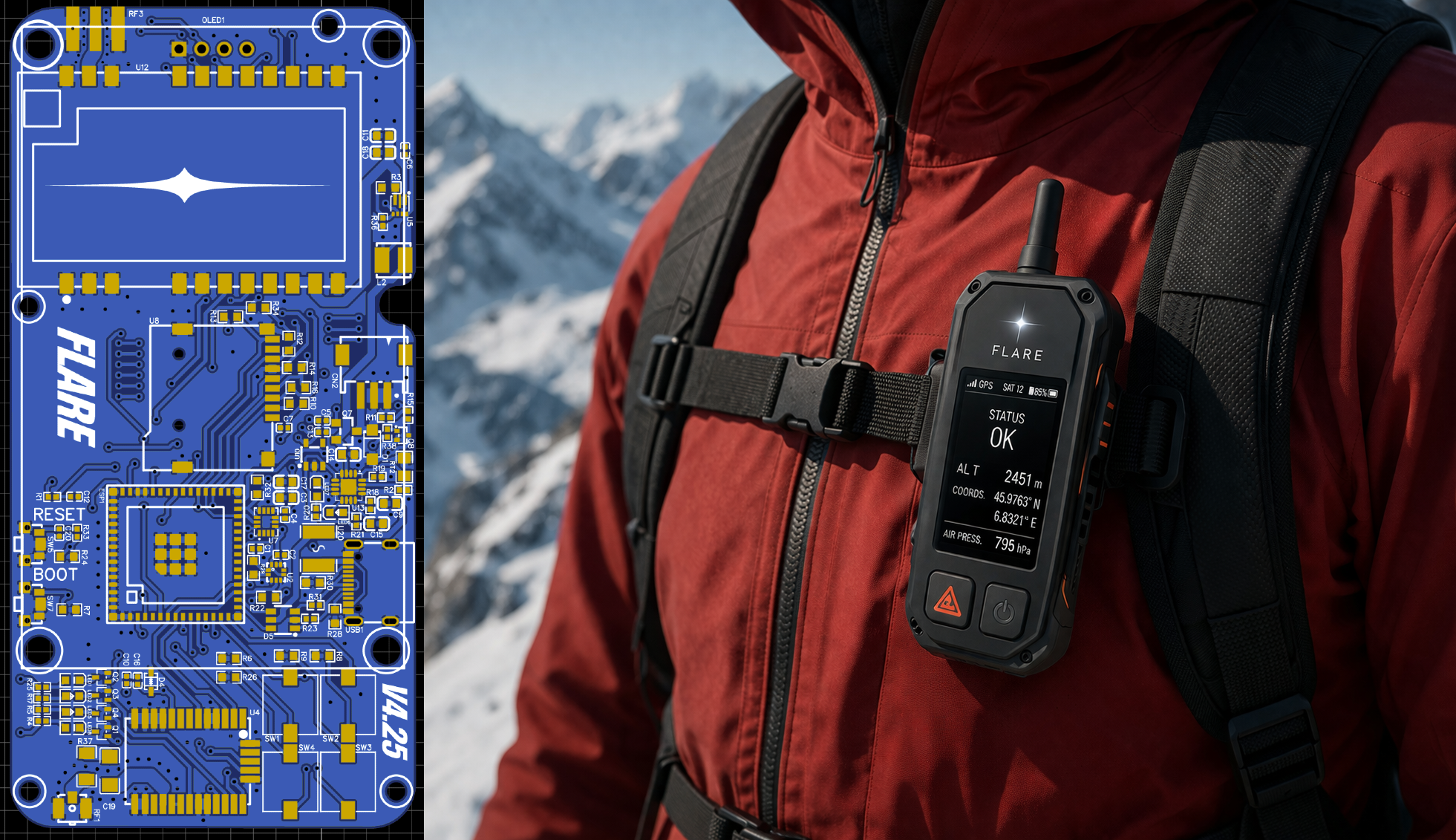
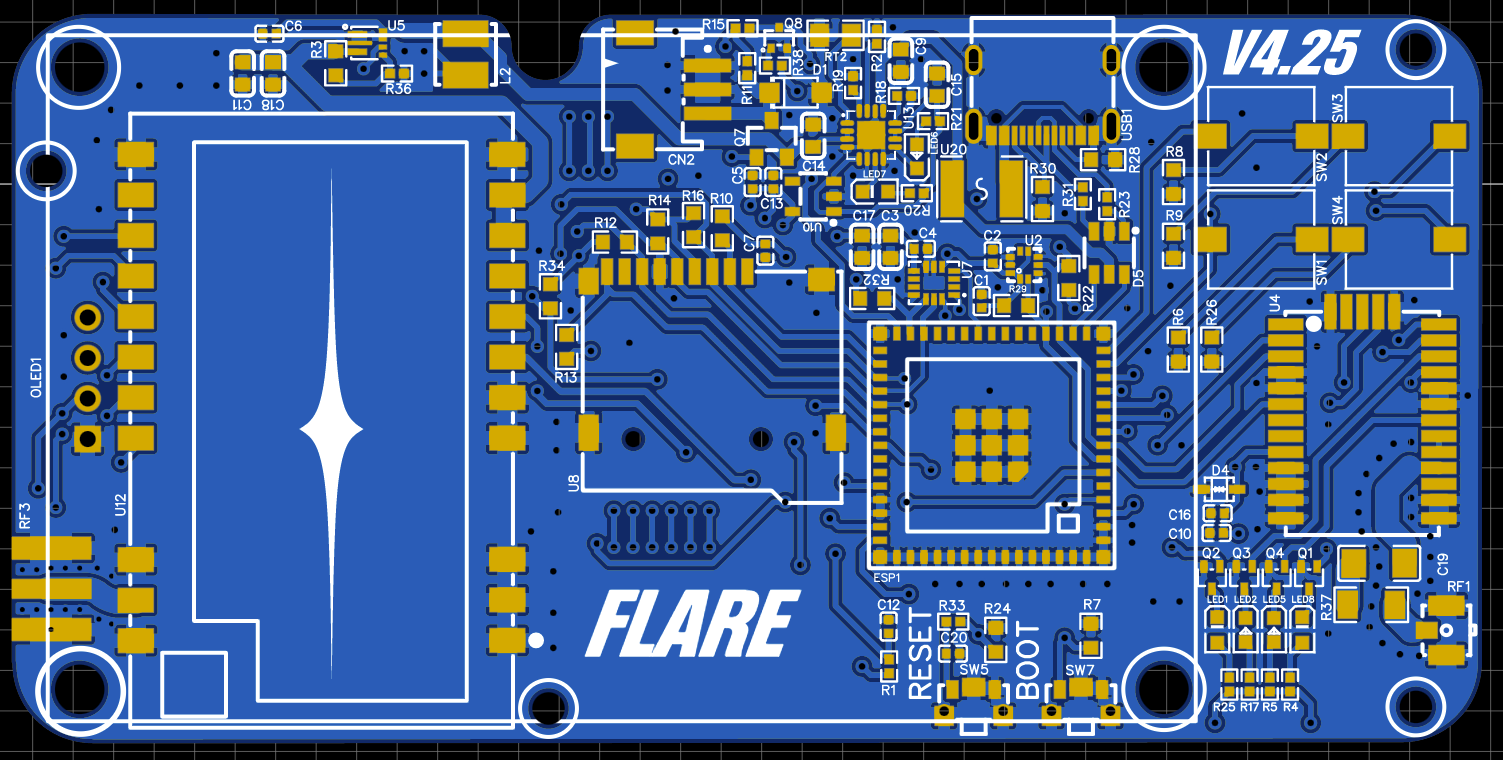
v4.25
Current PCB revision
5–10km
LoRa range (open field)
Overview
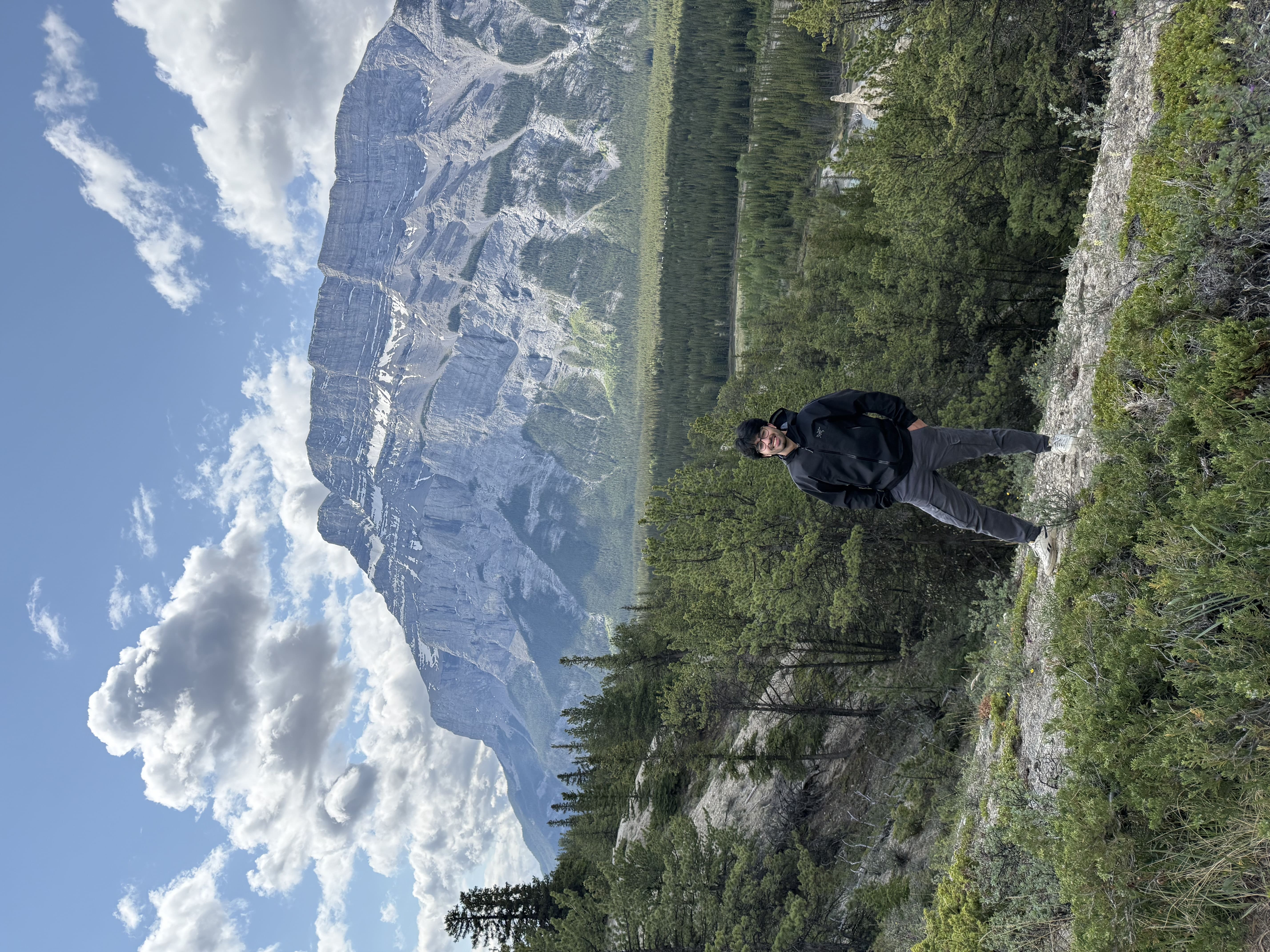
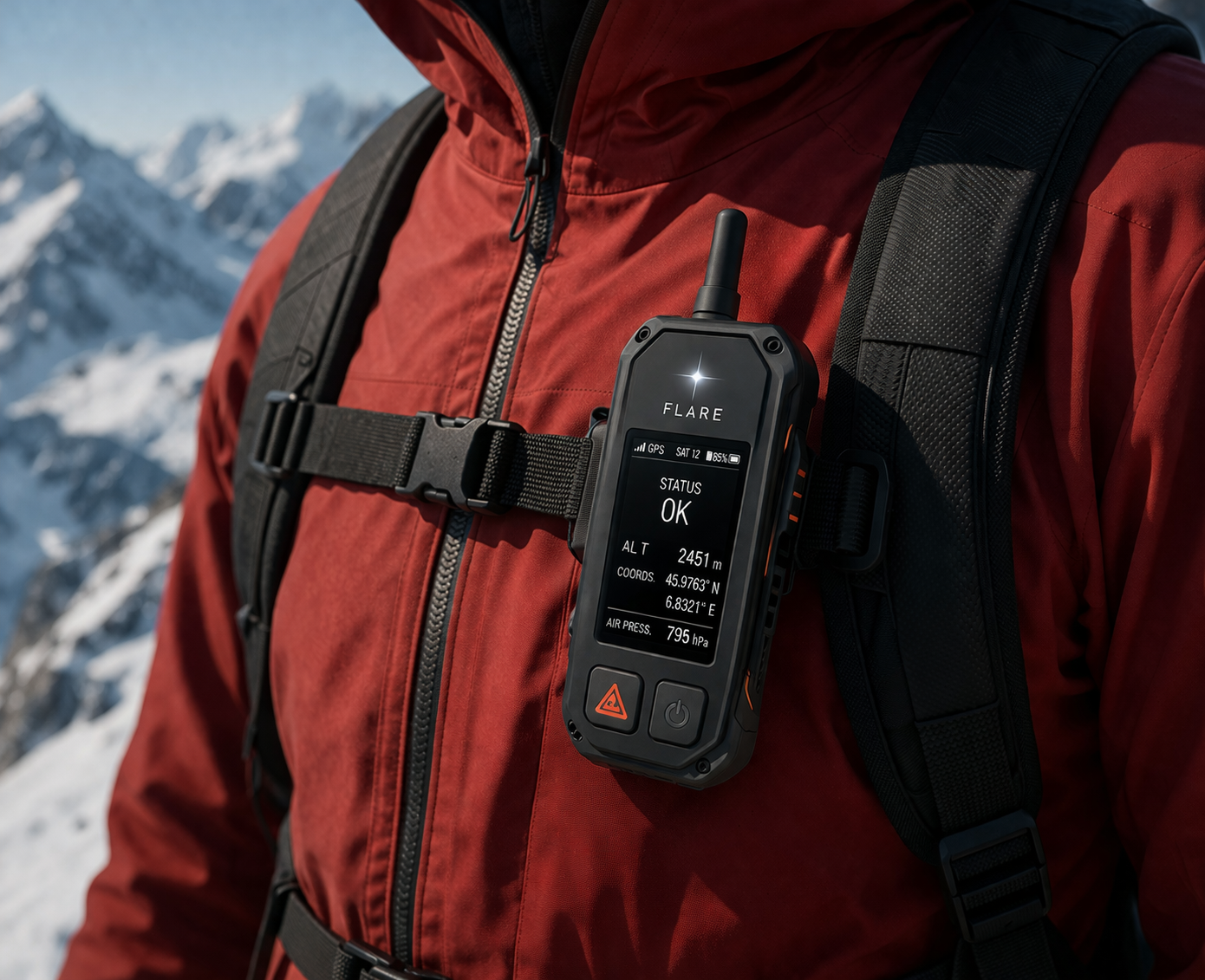
Developing a Wearable SOS Signal Transmitter Device for use in rural mountain sports. The idea arose after I fell into a small ditch while skiing at Mount Seymour in March 2025. I was lucky not to sustain serious injuries, but it forced me to wonder what would have happened had I been skiing alone. This sparked research into modern solutions — from avalanche beacons to RECCO tags — and revealed a gap between effective and widely accessible mountain safety tools.
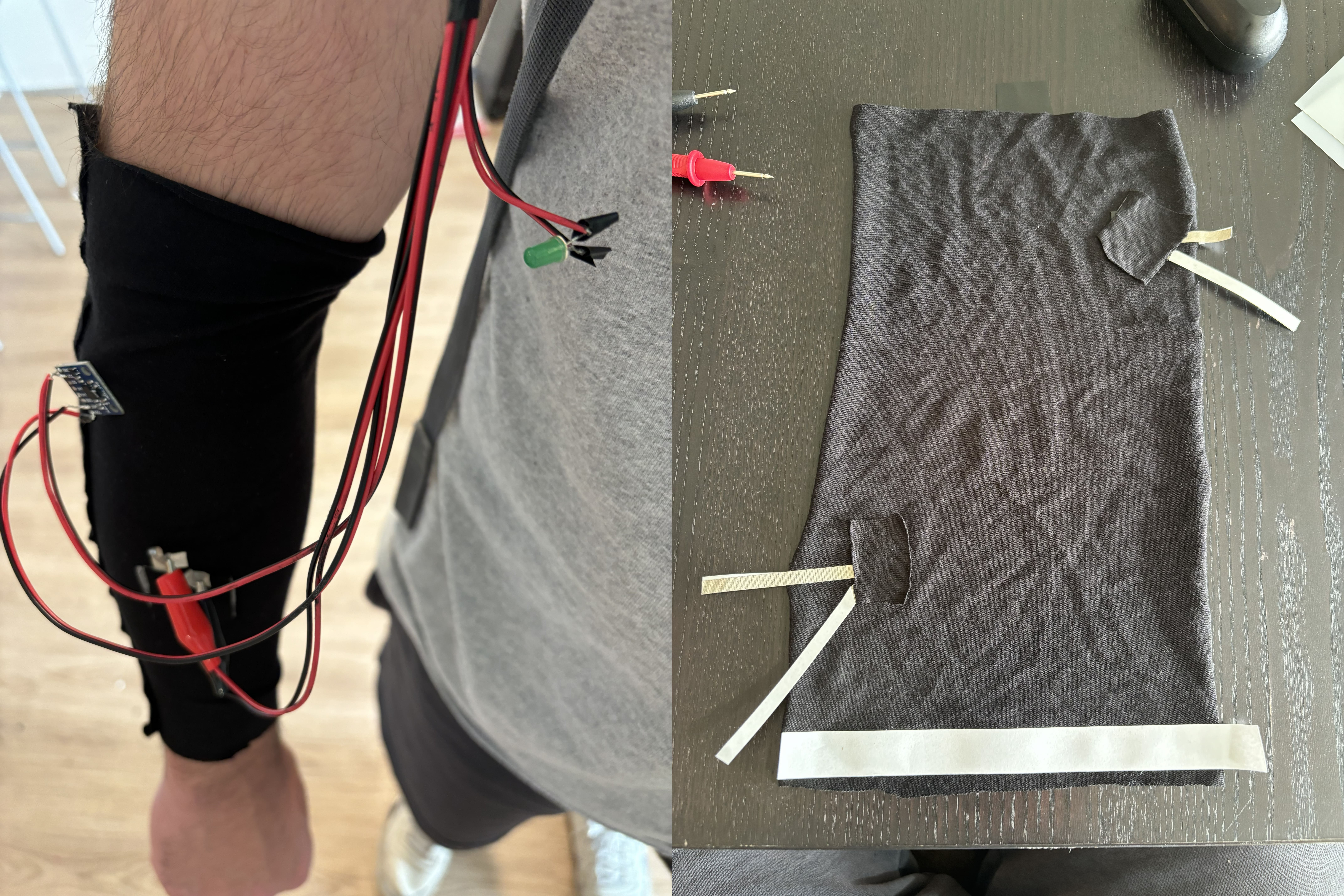
I began researching sensor options: IMU, EKG, and pressure sensors as primary candidates, with barometric, EMG and temperature sensors as secondary considerations. I started with pressure sensors using Velostat — a material whose resistance changes directly with applied pressure — constructing samples and analysing incoming data on an Arduino board.
I created a few smple armbands with a few pressure sensors sewed into the armband and quickly fund out the __ (all over the palce) readings due to the sensitivity of the velostat and the construction of the sensor was not great... This made me reconsider the effectiveness and usefulness of pressure sensors for this project and its purpose. Pressure sensors are local body sensors here... Therefore I decided to not move ahead with pressure sensors for the project, they could be a project of their own as they are quite a complex research topic.
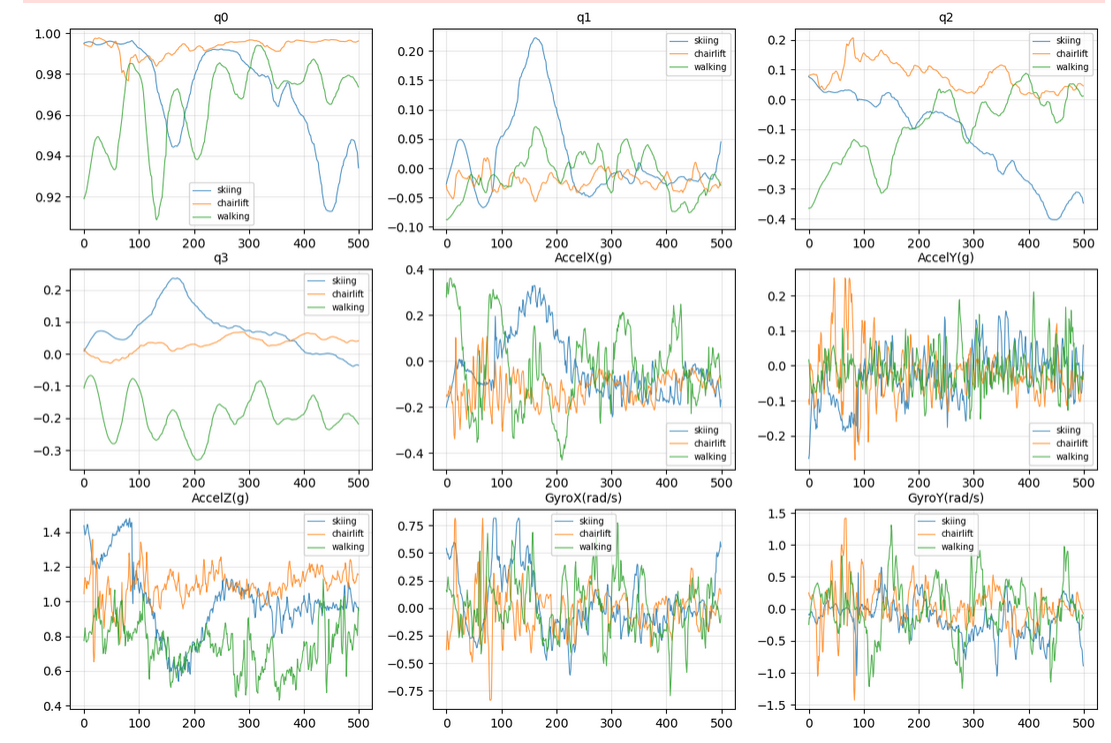
I decide to focus on the IMU sensor, it gave me acceleration, jerk, angular velocity and euler angle data - more than enough parameters to work with. After reaching this step, I decided to then focus on the second main function of the project, the SOS signal transmission. At first, I defined the concept of an SOS message, it must contain certain details about the user, primarily their personal detials, location for first responders to use and possibly any known medical conditions and even environmental conditions to aid with search & rescue. This meant I needed a few extra modules for my board, a GPS, a trasmitter & reciever system and a relevant environmental sensor.
The main focus was the communication system that needed to be used. There are many ways data can be communicated but only a few useful methods in a given rural environment, assuming no cellular connection would be available, which the options turn to be, some form of long range RF communication (excluding WiFi and Bluetooth) or a Satellite communcaition. Both paths were viable, where a satellite system would, at first glance, seem like the ideal solution for rural environments, however a quick Google search of such modules made me eliminate this option due to costs of $300+ and additional subscription fees with RockBlocks Satellite system. I did eliminate this option for prototype development, but kept it in the back of my mind for a possible future consideration for the final product.
That left long range RF communication, which I quickly came across LORA RF modules (Low-Power Radio Frequency), with preliminary search showing a range of 5-10km with typical modules, which was a promising final piece to this puzzle I am forming. Of course I would need to conduct further research into how these devices operate and conduct practical range tests. Range is highly dependent on a number of factors, primarily being physical interference between the sender and receiver modules, urban area would show worse performance, an ideal would be an open area, possible even better when sent from a high elevation. LoRa devices also need to have their paramters configured, such as trasmisison power, spreading factor coding rate and more. Changes in these factors are what will be tested against LoRa range performance and observations in signal quality.
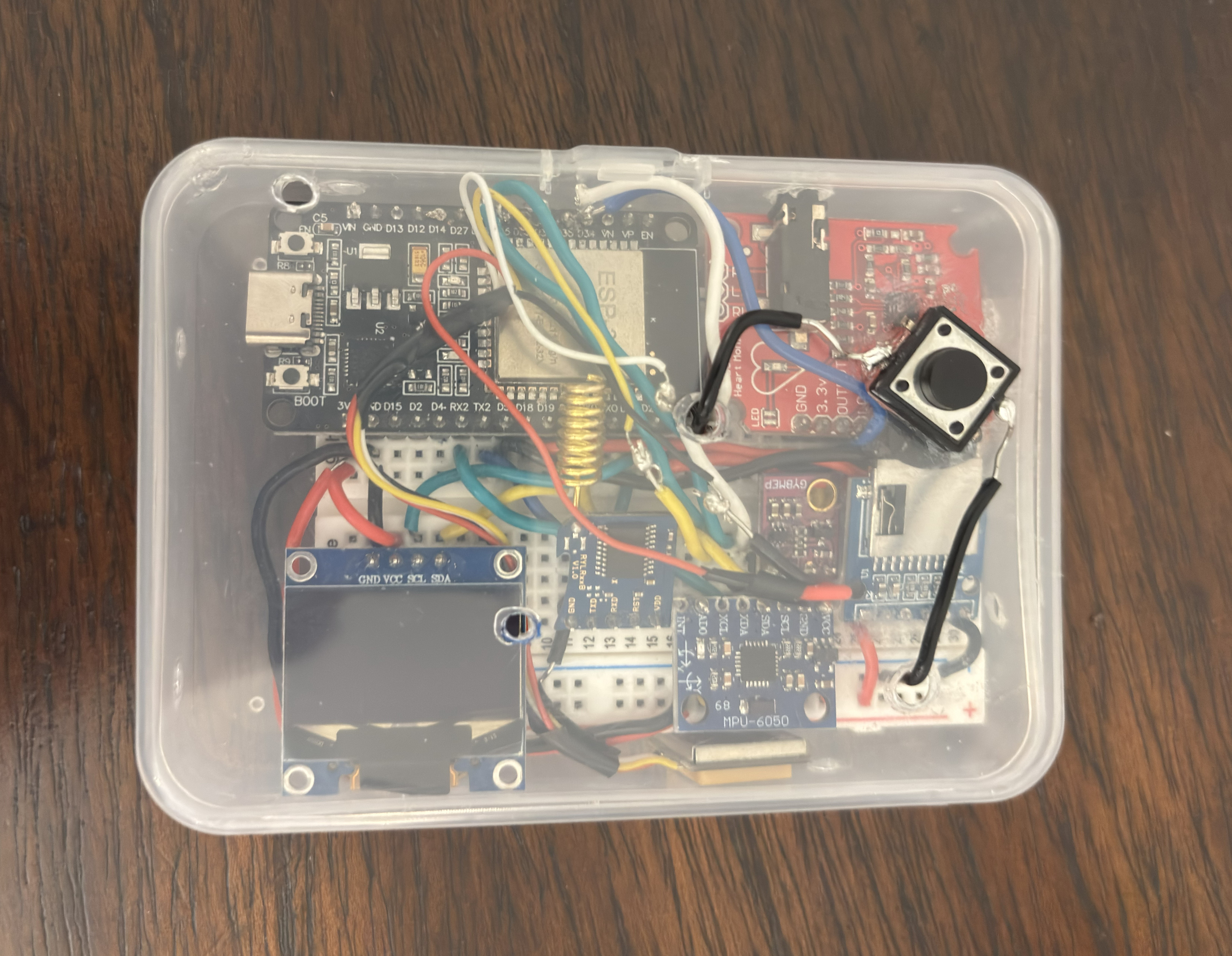
Moving forward, I began protoypting using the following modules: ESP32 as the MC to program, a MPU6050 as my IMU, BME 280 for temperature and pressure sensing, EKG for heart rate monitoring, SD card writer and RYLR998 LoRa module. What I eventually came up with is shown in Figure 3, my first finalized prototype breadboard ready to be used to collect data while skiing, powered by a power bank. I came up with a testing emthodology and trialed it at home to test rectify any potential issues with my code and setup to ensure data integrity for a few hours.I took it to Lebanon where I recorded a total of a 2 hour ski session, classifying the following events: "Normal Skiing", "Chairlift" &, "Walking".
Key Achievements
- [Achievement #1]
- [Achievement #2]
- [Achievement #3]
Arduino
LoRa
IMU Sensors
Velostat




.gif)